WeMove
Creating an online intervention program for people living with osteoarthritis.
Problem
People living with osteoarthritis in the western suburbs of Melbourne face long wait times to see a specialist. During that time their condition can get worse if it isn’t properly managed. So Victoria University and Western Health wanted to develop an online intervention program so that people could manage their condition independently – and maybe even improve it.
They wanted this program to be accessible to everyone regardless of their health literacy or cultural and linguistic background. So that they can independently learn about their condition, get accurate clinical advice and take tangible steps to improve their quality of life.
Solution
I was the lead content strategist on this project. The project team started by interviewing a range of clinicians, health professionals and people with osteoarthritis to understand their needs and challenges in managing or treating osteoarthritis. This helped us to map out the current patient journey so that we could understand what an effective program needed to include in order to be successful. From this we created low fidelity wireframes and prototypes of the program, we tested these regularly with patients and clinicians and iterated based on their feedback.
Once we were happy with the fundamental design of the online program, I worked closely with the client team on the content approach. Using insights from earlier research we worked together to understand the content needs of people living with osteoarthritis so that they could confidently use the program. We established a content structure for the overall program and the individual landing pages. I then created a series of templates as well as a healthcare content writing guide so that the client team could produce the program’s content on their own.
Impact
Once live, the co-designed purpose-built online intervention program will be available to people living with osteoarthritis in the western suburbs of Melbourne. Program users can create a secure account, set up personal health goals, track their progress, and work through different modules about health and wellbeing, such as diet, mental health and exercise.
The accessible, translation-friendly content approach also ensures that the program is accessible to people with English as a second language and people with low health literacy.
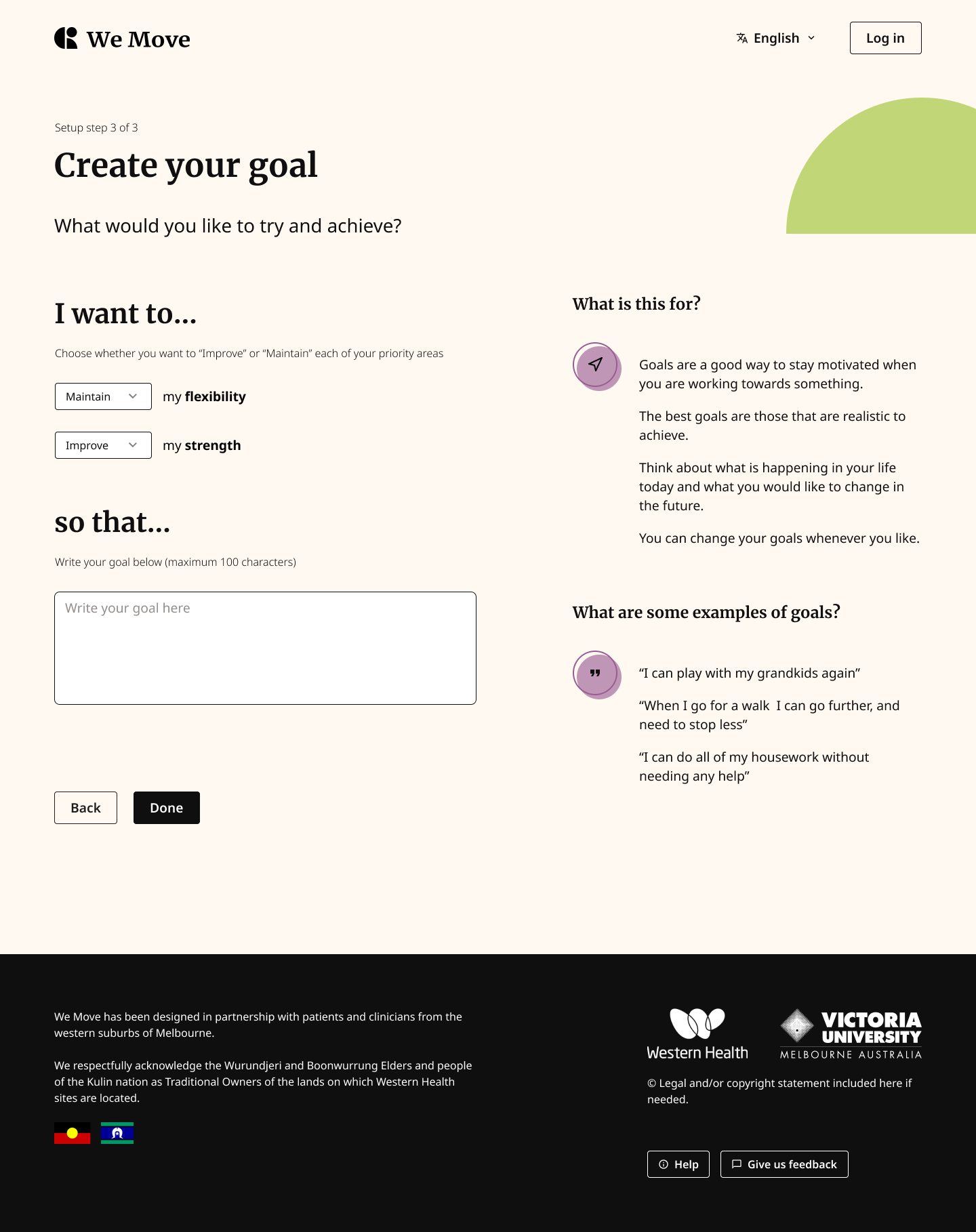
An image from the high-fidelity prototype that was created during this project.
Key skills
Workshop facilitation
Content strategy
Content design
UX and UI writing
Healthcare writing
Plain English writing
Training and mentoring
Writing for translation